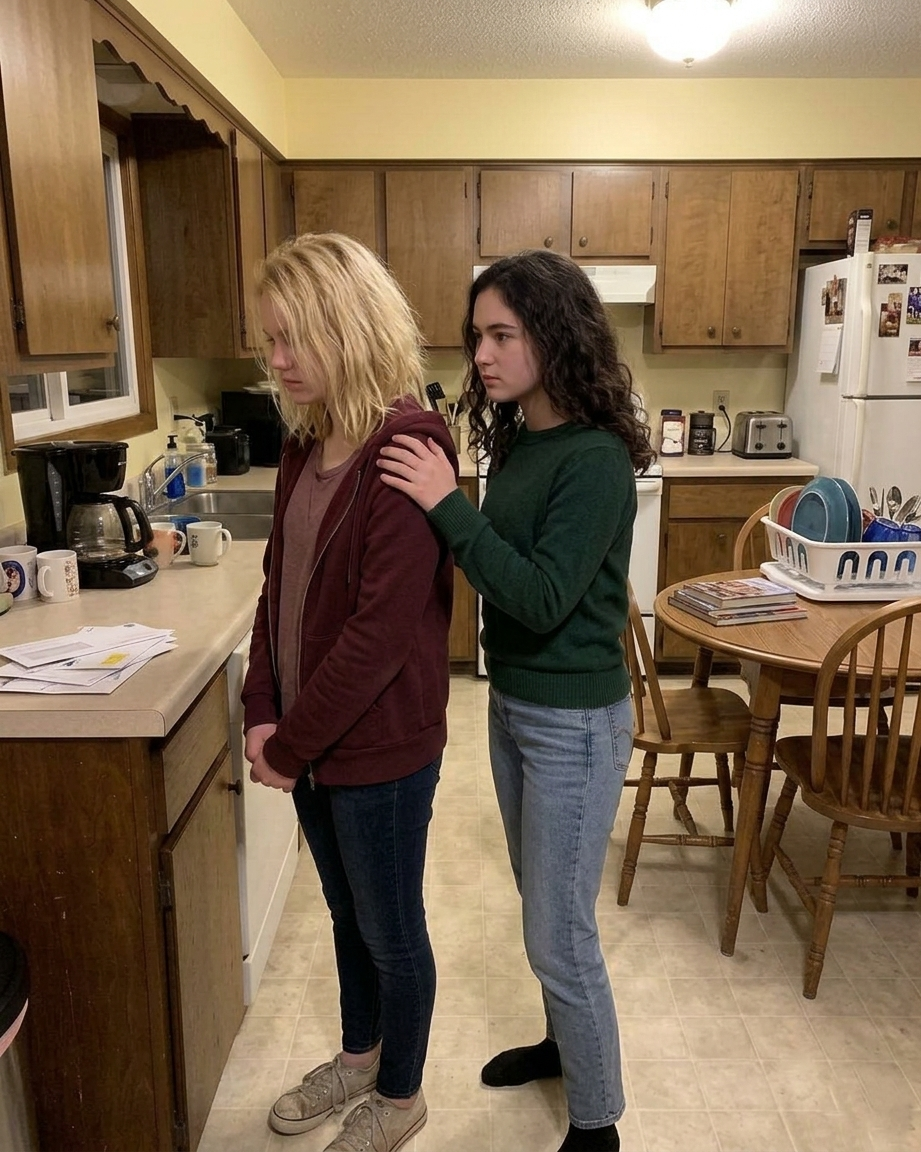
When my daughter brought a quiet, hungry classmate home for dinner, I thought I was just stretching another meal. In our house, “enough” was something I argued with every week—enough food, enough money, enough time before the next bill was due. That Tuesday night, I had planned carefully: rice, chicken, carrots, and half an onion. Just enough for three plates and maybe lunch the next day.
Then Sam walked in with a girl named Lizie. She stood in the doorway with a faded backpack, worn sneakers, and eyes fixed on the floor. At dinner, she barely ate at first, taking tiny spoonfuls as if she was afraid there wouldn’t be enough. But I noticed how quickly she drank her water and how tense she looked at every sound. After she left, I told Sam she couldn’t keep bringing people home when we were already struggling. Sam looked at me with tears in her eyes and said, “She didn’t eat all day, Mom.”
When Lizie finally admitted what was happening, she told us her father was working nonstop after her mother died, but they still couldn’t keep up. He was ashamed and didn’t want anyone to know. When he came over that night, exhaustion was written all over his face. Dan and I told him that Lizie shouldn’t have to carry this alone. So we made calls—to the school counselor, the food pantry, the landlord, anyone who could help.
It wasn’t a miracle, but it was enough. Lizie started getting support at school, her father found help with rent, and she spent more time at our house. Soon, she was laughing at our table, helping Sam with math, and calling me “Aunt Helena.” One night, she hugged me and whispered, “It feels safe here.” From then on, I stopped counting slices of meat and started counting smiles. And every night after that, I set out four plates instead of three.
