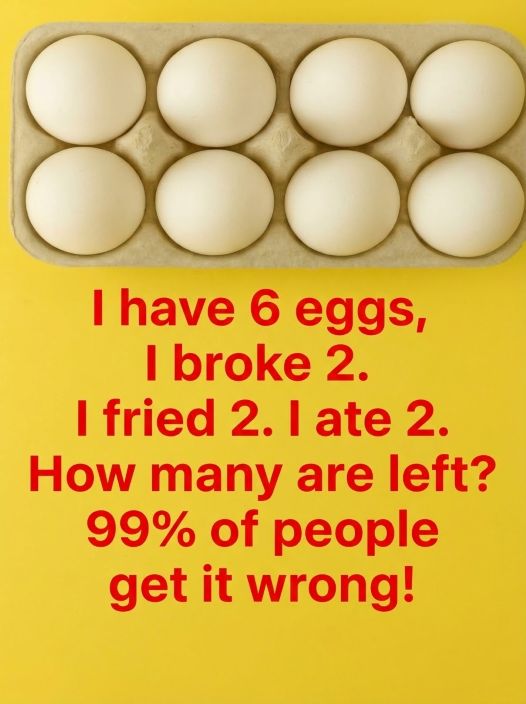
Brain teasers have a unique way of pulling us in, asking us to pause and see familiar ideas from a fresh perspective. Unlike typical math problems, many riddles rely more on language and logic than numbers. They gently challenge our instincts, encouraging us to slow down instead of rushing to an answer. One classic example, often shared online and in classrooms, is the famous “six eggs” riddle—a puzzle that seems simple but continues to spark debate.
The riddle is usually presented plainly: “I have six eggs. I broke two, fried two, and ate two. How many eggs are left?” At first glance, it sounds like three separate actions involving different eggs. Because of that, many people quickly assume all six eggs are gone. The answer feels obvious, and that sense of confidence is exactly what the riddle relies on.
The clever twist appears when you take a moment to read more carefully. To fry an egg, it must be broken first, and to eat an egg, it must already be cooked. That means the same two eggs were broken, then fried, and finally eaten. No additional eggs were used in the process at all.
Continue reading…
