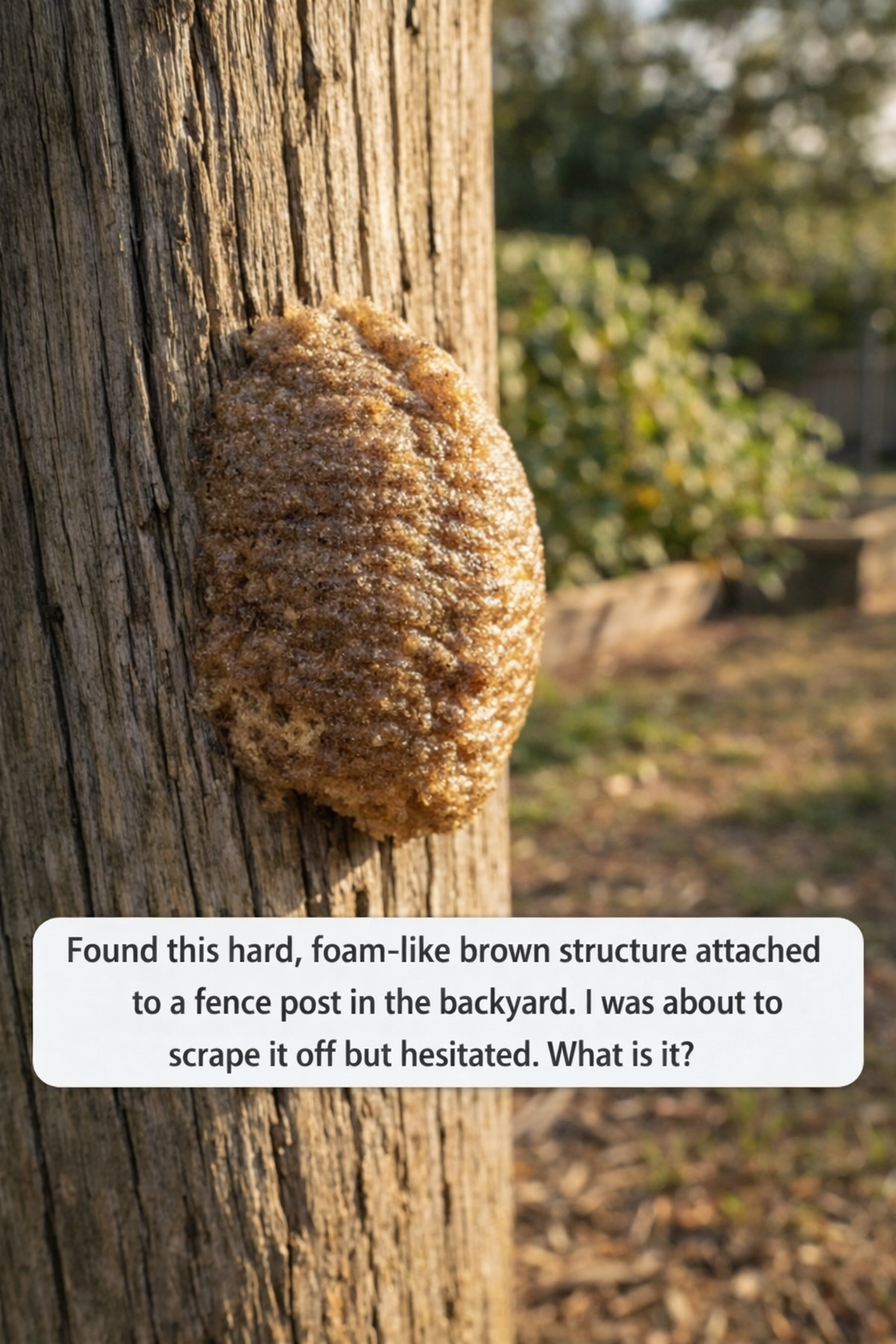
I Found a Hard, Foam-Like Brown Structure on My Fence — Here’s What It Could Be
What you’re likely seeing is a praying mantis egg case, known as an ootheca. Formed in late summer or early fall, the female mantis creates this protective casing to hold her eggs through the colder months. Though it looks small, each case can contain hundreds of tiny mantises waiting for spring. Its firm, ridged surface protects them from harsh weather and hungry predators.
Praying mantises are natural allies in the garden. They feed on insects that often damage plants, including flies, caterpillars, and aphids. Once temperatures rise, the young mantises hatch and spread across nearby plants, helping keep pest populations under control without the need for chemicals. Their presence is often a sign of a healthy outdoor space.
What may seem odd at first can turn into a small wonder of nature. By simply letting it be, you give hundreds of helpful insects a chance to grow and protect your garden. Sometimes, the strangest discoveries become the most rewarding ones.
