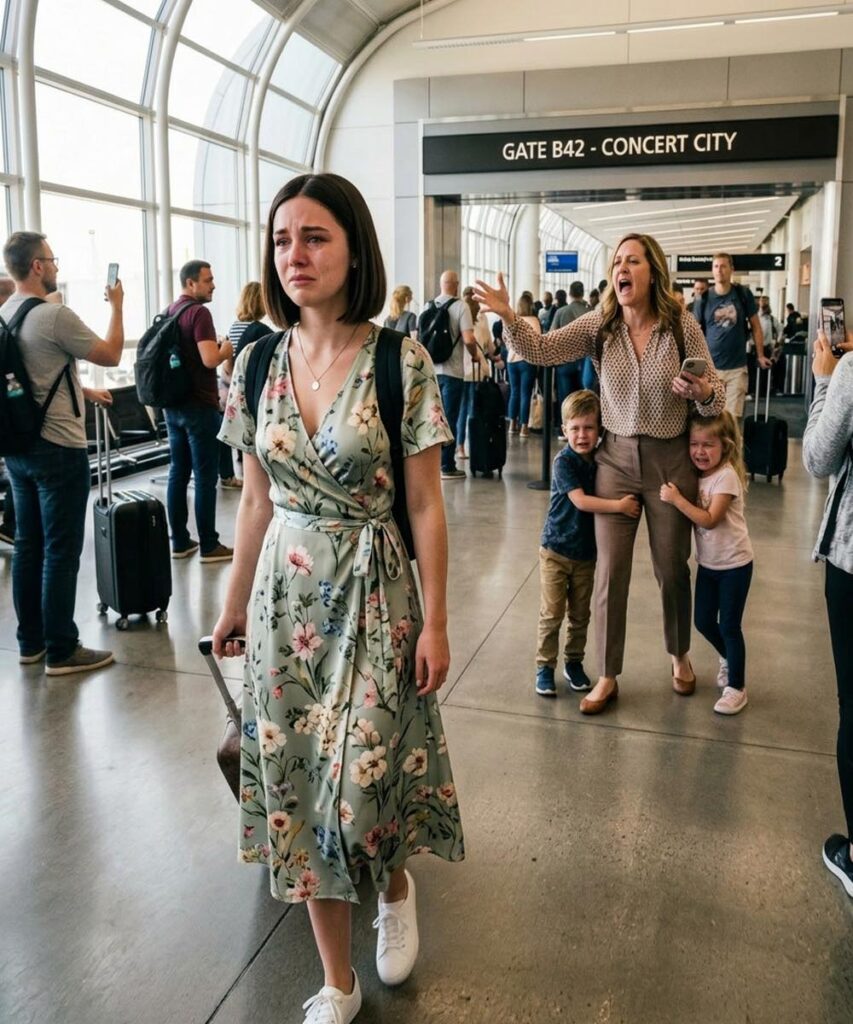
There are moments when a relationship names itself.
This was one.
Another pause.
And in that silence, ten years of my sister’s dependence rearranged into something far less flattering than closeness.
It wasn’t need.
It was strategy.
I came home from Denver Sunday night with a signed offer letter, a headache, and a decision already made.
By Tuesday, I had updated my emergency contact forms at work, changed my apartment access list, and sent one email to my family with the subject line Boundaries Going Forward.
I kept it short.
I wrote that I loved Lila and Owen deeply. I wrote that I wanted a relationship with them. I wrote that I was no longer available for unplanned childcare, transportation, or “temporary” coverage arranged under pressure. Any request involving the twins had to be made at least a week in advance, and I reserved the right to decline without explanation. I wrote that if anyone ever tried to leave the children with me without clear agreement, I would ensure they were safe and then involve whatever authority was necessary to return responsibility to their parents.
Please do not teach the twins to expect me when you have not asked me. That is unfair to them and to me.
My mother called first.
“This is so formal,” she said, as if structure itself were unkind.
“Yes,” I replied. “That’s the point.”
She made the usual arguments—family shouldn’t need rules, love shouldn’t sound legal, everything had been blown out of proportion. I listened, then asked one question.
“Mom, when Dad worked weekends and you needed childcare, did you ask Grandma ahead of time?”
“Well, of course.”
“Why?”
I let that sit.
When she spoke again, her voice was softer. “Your sister relies on you.”
“I know,” I said. “That’s the problem.”
Melanie didn’t call for six days.
When she finally did, she sounded less angry than worn down. “You really think I’m a bad mother.”
“No,” I said. “I think you’re a loving mother with terrible habits around responsibility.”
She gave a bitter laugh. “That’s a very therapist answer.”
“Maybe. It’s also true.”
We circled the issue at first. Then the truth came out in pieces. Nate had pushed hard for the trip. Melanie had gambled that once the twins were physically at the airport, I wouldn’t leave them there. She admitted she told them, in the car, that Aunt Tara would probably take them because “she always comes through.”
“I thought if I asked ahead of time, you’d say no,” she said.
“I did say no,” I reminded her. “You just waited until it would cost me more.”
That quieted her.
Then, unexpectedly, she started crying.
“I’m so tired, Tara.”
There it was—the truth underneath everything. Not an excuse. A source.
The twins were exhausting. Nate traveled, overpromised, and treated parenting logistics like an inconvenience. Melanie felt trapped in a life she loved in photos but struggled with in reality. None of that made her behavior okay. But hearing it said plainly changed something.
“I know you’re tired,” I said. “But you don’t get to fix that by volunteering me.”
She cried harder.
A week later, we met at a park while the twins were at school.
It was the first honest conversation we’d had in years.
Not easy. Honest.
I told her what it felt like to be treated as the invisible third parent—no authority, no appreciation, only responsibility when things went wrong. She admitted she had relied on me in ways she didn’t want to examine, because doing so meant confronting her marriage too. Nate joined us the following weekend, defensive at first, then quieter as I laid out the pattern with dates. I watched him shift as he realized this wasn’t just “sisters being dramatic.”
The outcome wasn’t perfect.
No big apology speech. No overnight transformation.
Just changes.
They hired a part-time weekend sitter and paid her properly. Nate took over Saturday sports. Melanie joined a parents’ support group instead of trying to run everything on stress and improvisation. For the first time, they started asking instead of assuming.
Sometimes I still said yes.
That mattered.
Because a boundary isn’t a wall. It’s the difference between being used and being chosen.
Three months later, Lila and Owen spent a Friday night at my apartment. Planned ahead. Bags packed. Contacts printed. Melanie texted once at 7:10 p.m. to ask about bedtime, and I sent a photo of the twins building a blanket fort while frozen pizza baked. She replied with three heart emojis and, for the first time I could remember, Thank you for doing this.
I stared at that message longer than I should have.
Not because it fixed everything.
But because it showed she was finally learning the difference between help and entitlement.
A year later, I went to another concert with the twins—an outdoor show in Milwaukee for a glittery pop band they loved. Melanie and Nate came too. No one got stuck with anything. We drove separately, shared fries, laughed at the merch prices, and smiled when Owen fell asleep halfway through the encore with a foam finger still on his hand.
On the drive home, Lila asked, “Aunt Tara, remember the airport trip when Mom thought you were taking us?”
I glanced at Melanie, who looked instantly uneasy.
Before she could answer, I said, “I remember everyone learned to make better plans after that.”
Lila nodded thoughtfully. “That’s true.”
Melanie met my eyes in the rearview mirror.
And for once, neither of us looked away.
The real ending wasn’t that my sister became perfect. It wasn’t that I never helped again. It was that one messy airport moment forced all of us—especially the adults—to stop confusing love with unpaid obligation.
According to the texts, I ruined a concert trip.
What I actually ruined was a pattern.
And that turned out to be the best thing I could have done—for all of us, especially the kids who no longer had to be part of the setup.
