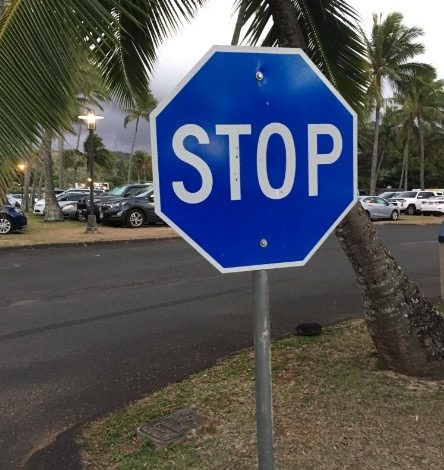
Imagine driving down a quiet street, enjoying the day, when something odd catches your eye: a stop sign—but instead of bright red, it’s a deep blue.
Naturally, you might feel confused. Do you stop? Is it a prank? Have the rules of the road suddenly changed?
Yes, You Should Still Stop
Even if the color is different, the message remains the same: a blue stop sign almost always means stop. Bring your vehicle to a complete halt, check both ways, and proceed only when safe.
However, an important distinction: in the United States, blue stop signs are not official traffic signs for public roads. They are almost always used on private property. While they signal safety and courtesy, they don’t carry the same legal authority as government-issued red signs.
Why Red Is the Official Stop Sign Color
Every U.S. public road sign must follow rules in the Manual on Uniform Traffic Control Devices (MUTCD):
- Stop signs must be red with white letters
- Octagonal shape = STOP, no exceptions
- Deviating from these rules on public roads is illegal
Red was chosen because it universally signals danger and urgency. Standardization ensures drivers recognize stop signs instantly, even from a distance.
If you ever see a blue stop sign on a city street or highway, it’s likely:
- A prank
- Vandalism
- A rare error
If encountered, stop for safety, and consider notifying local authorities.
Where Blue Stop Signs Are Used
Continue reading…
