ADVERTISEMENT
How to Pick a Sweet Watermelon Without Cutting It Open—and Turn It Into an Easy Summer Salad
A Few Simple Visual and Weight Clues Can Make Watermelon Shopping Feel Far Less Like Guesswork
Few summer disappointments compare with carrying home a heavy watermelon, cutting through the rind, and discovering pale, watery fruit where you expected crisp, deeply colored sweetness.
But experienced shoppers often look for several visible clues before putting a melon into their cart.
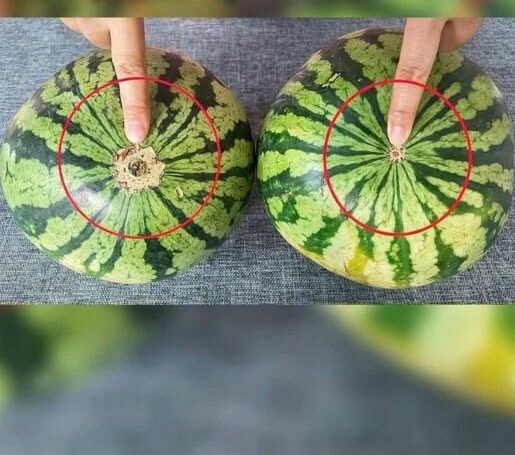
The field spot, surface markings, stem, shape, and weight can all provide useful information about how the fruit developed before harvest.
Start With the Field Spot
One of the first areas to examine is the patch where the watermelon rested against the ground while growing.
This area is commonly called the field spot.
A creamy yellow or deeper golden field spot is often preferred when selecting a watermelon.
A very pale or nearly white spot may suggest that the fruit was harvested before developing the appearance many shoppers associate with greater maturity.
Do Not Reject a Watermelon Because of Rough Brown Marks
These markings are often called webbing or sugar scars.
They may make the fruit look less polished than perfectly smooth watermelons sitting beside it.
But cosmetic perfection is not necessarily the most important characteristic when searching for good fruit.
A watermelon does not need a flawless exterior to contain appealing flesh inside.
Pick It Up Before Making Your Decision
When comparing watermelons of approximately the same size, many shoppers prefer the one that feels unexpectedly heavy.
Try lifting two or three fruits that look similar in size.
The difference can sometimes be easier to notice through comparison than by evaluating a single melon by itself.
A fruit that feels substantial for its dimensions is often more appealing than one that feels unusually light.
Look at the Stem When One Is Still Attached
Some watermelons reach stores without much of the stem remaining, while others still have a visible section attached.
When a stem is present, its appearance provides another small clue to consider.
A dry, brown stem is commonly associated with a melon that had more time to mature before being separated from the plant.
A very green, fresh-looking stem may indicate that the fruit was picked more recently or earlier in its development.
Again, the stem should not be used as the only test.
Think of it as one part of a larger collection of signs.
A Uniform Shape Can Make Selection Easier
Watermelons naturally come in different sizes and shapes.
Some are long and oval, while others are rounder and more compact.
Either shape can produce enjoyable fruit.
What matters more is overall consistency.
Look for a watermelon that appears reasonably symmetrical without large dents, deep soft areas, or obvious damage.
A strangely flattened or severely irregular section may indicate that the fruit experienced uneven growing conditions.
Minor surface imperfections, however, are not automatically a reason to reject it.
What About Thumping the Watermelon?
Generations of shoppers have tapped or thumped watermelons while listening carefully to the sound.
The technique has become almost inseparable from summer produce shopping.
Some people swear by it.
Others admit they have been thumping melons for years without really knowing what they are listening for.
If the method does not make sense to you, there is no reason to depend on it alone.
Visual characteristics and comparative weight are usually easier for most shoppers to evaluate consistently.
Use Several Clues Together
The easiest approach is not to search for one magical indicator.
Instead, combine the available information.
Look for an appealing field spot.
Notice whether there is natural webbing or other harmless surface marking.
Check the stem if it is still attached.
Examine the shape.
Then pick the fruit up and compare its weight with nearby watermelons.
The more of those characteristics that look promising, the more confidently you can make your choice.
The First Cut Is Still the Best Moment
Even after carefully choosing the fruit, there is something satisfying about the moment the knife finally passes through the rind.
A good watermelon reveals crisp flesh and a fresh aroma as the two halves separate.
That first slice can immediately become the centerpiece of a summer table.
Watermelon is enjoyable straight from the refrigerator, but it also works particularly well in simple dishes that combine sweetness with contrasting flavors and textures.
One especially easy combination pairs it with avocado, lime, mint, and optional savory ingredients.
Watermelon and Avocado Make an Unexpected Pair
At first, watermelon and avocado may seem like very different ingredients.
Watermelon is crisp, juicy, and sweet.
Avocado is smooth, creamy, and mild.
That contrast is precisely what makes them interesting together.
Each bite contains both freshness and richness without requiring complicated preparation.
A squeeze of lime helps bring the two ingredients together.
Fresh mint adds another layer of aroma and brightness.
Keep the Preparation Simple
Begin by cutting chilled watermelon into bite-sized cubes or small wedges.
Cut ripe avocado into pieces of approximately the same size.
Place both ingredients in a wide bowl or serving platter.
Add fresh lime juice shortly before serving.
Torn or thinly sliced mint can then be scattered over the top.
The goal is not to overwhelm the watermelon.
The fruit should remain the main flavor.
A Little Salt Can Change the Flavor Completely
Sweet fruit often becomes even more interesting when paired with a small savory element.
A light sprinkle of salt can make watermelon taste more vivid.
For a richer version, add a small amount of salty cheese.
The combination of sweet watermelon, creamy avocado, tangy lime, and salty cheese creates several contrasting flavors in a single bite.
People who enjoy a little heat can also add chili.
Even a small amount can create a noticeable contrast with the cool fruit.
Turn It Into a Casual Summer Platter
There is no need to prepare the entire dish in advance.
A simple summer gathering can be built around a large platter of chilled watermelon with smaller bowls of toppings arranged nearby.
Set out avocado, lime wedges, mint, cheese, chili, or a creamy topping.
Guests can assemble combinations according to their own preferences.
Some may want nothing more than watermelon and lime.
Others may pile several ingredients onto each piece.
This approach keeps entertaining relaxed and allows the watermelon itself to remain the centerpiece.
Cold Watermelon Can Make the Simplest Afternoon Feel Special
One reason watermelon remains so closely associated with summer is that it requires very little effort once it is chilled and sliced.
A platter on the porch can be enough.
There does not need to be an elaborate recipe or complicated presentation.
The sound of conversation, a bowl of cold fruit, and a few simple toppings can create the kind of meal people remember precisely because nothing about it feels forced.
Food does not always have to be complicated to feel generous.
Storage Matters After the Watermelon Is Cut
Once the rind has been opened, refrigerate the remaining watermelon rather than leaving it sitting at room temperature for extended periods.
Large pieces can be covered before refrigeration.
Smaller cubes can be placed in a sealed container.
Keeping the fruit cold preserves the crisp, refreshing quality that makes watermelon especially appealing during hot weather.
For salads containing avocado, adding the avocado closer to serving time usually keeps the texture and appearance fresher.
The Rind Does Not Need to Look Perfect
Produce shopping often encourages people to select whatever looks most flawless.
With watermelon, that instinct can sometimes distract from more useful clues.
A melon with a creamy field spot, rough webbing, and a slightly weathered exterior may not be the prettiest one in the pile.
That does not mean it should automatically be rejected.
The rind tells the story of fruit that spent its growing period exposed to soil, sunshine, weather, and the natural conditions of a field.
Minor imperfections are part of that process.
Choosing Fruit Becomes Easier With Practice
The first few times you deliberately inspect watermelons, the process may still feel uncertain.
After several trips, however, the characteristics become easier to recognize.
You begin automatically turning the fruit over to find the field spot.
You compare weight without thinking about it.
You notice stems and webbing that once would have seemed insignificant.
Eventually, shopping becomes less about randomly choosing the biggest melon and more about reading several small clues.
There Is No Truly Guaranteed Watermelon
It is tempting to describe a particular trick as a guarantee of perfect sweetness.
Fruit does not work quite that predictably.
Growing conditions, variety, harvest timing, transportation, and storage can all affect what you eventually find inside.
Two watermelons with similar exteriors may still taste different.
The purpose of these selection techniques is therefore not to promise perfection.
They simply give you a more informed way to choose.
Summer Food Can Remain Wonderfully Uncomplicated
There is something comforting about learning small kitchen habits that remove a little uncertainty from everyday life.
Choosing a watermelon more carefully is one of them.
You inspect the field spot.
You notice the rind.
You check the stem.
You lift the fruit and trust the weight in your hands.
Then you take it home, chill it, and eventually hear the satisfying crack as the rind opens beneath the knife.
A Good Watermelon Needs Very Little
When the fruit itself is crisp and flavorful, complicated recipes become unnecessary.
Eat it cold by itself.
Add lime and mint.
Pair it with avocado.
Bring in a salty cheese or a little chili if you want stronger contrast.
Share it outdoors with friends or keep a bowl waiting in the refrigerator for a hot afternoon.
The appeal comes from simplicity.
One Sweet Melon at a Time
Watermelon season does not need to feel like a repeated guessing game.
There will always be some uncertainty until the fruit is opened, but paying attention to the field spot, weight, stem, shape, and natural rind markings can make the selection process much more intentional.
And once a good watermelon reaches the kitchen, very little stands between it and a memorable summer dish.
A little avocado, fresh lime, mint, and something salty are enough to turn simple slices into a colorful platter worth sharing.
Sometimes the best food habits are not dramatic transformations.
They are small pieces of knowledge repeated until they become instinctive.
Choose carefully, keep the preparation uncomplicated, and let the watermelon do most of the work.
ADVERTISEMENT
